
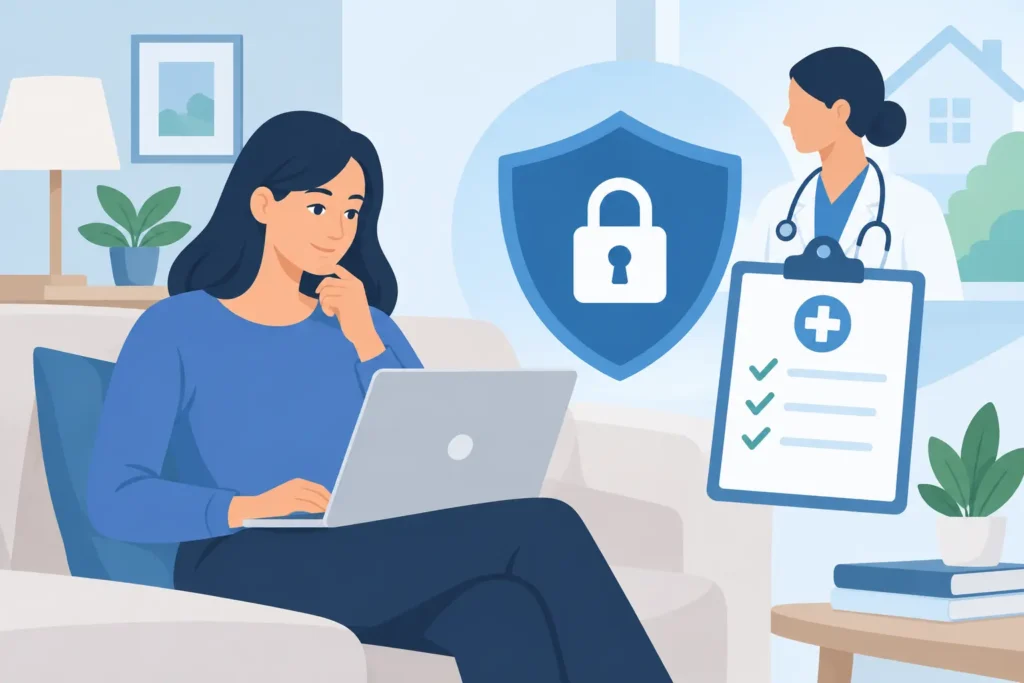
A home blood draw can remove a major barrier to care, especially when travel, mobility, recovery, work, or caregiving makes a trip to a patient service center difficult. But are home collections HIPAA compliant? They can be, provided the mobile collection provider follows the right privacy and security practices from scheduling through specimen handoff.
The setting alone does not determine HIPAA compliance. A collection performed in a private home, senior living community, office, or concierge practice can protect patient information just as carefully as one performed in a laboratory draw center. What matters is how the provider handles protected health information, or PHI, at every step.
Are Home Collections HIPAA Compliant in Practice?
HIPAA is a federal law that sets standards for protecting identifiable health information. In a mobile collection setting, PHI may include a patient’s name, date of birth, contact details, laboratory order, diagnosis information, insurance details, specimen labels, and test results.
A mobile phlebotomy provider may work directly for a laboratory, physician practice, research sponsor, care facility, or patient. Whether that provider is directly subject to HIPAA can depend on its relationship with the covered healthcare organization and whether it functions as a business associate. That distinction is meaningful legally, but it should not change the standard a patient experiences: their information should be handled privately, carefully, and only for the purpose of arranging and completing care.
A reliable mobile collection service should have clear procedures for receiving orders, verifying identity, documenting the collection, transmitting required information, and coordinating directly with the designated laboratory. Privacy is not a form signed at the start of an appointment. It is a workflow.
Privacy begins before the phlebotomist arrives
The first privacy decision often happens during scheduling. A provider should collect only the information needed to confirm the appointment, validate the order, identify the patient, and prepare for the requested collection. Sensitive details should not be requested through casual, unsecured channels simply because a home visit is more convenient.
Confirmations should also be discreet. It may be appropriate to confirm the appointment time, arrival window, and basic preparation instructions. It is not appropriate to leave detailed medical information in a voicemail, text message, or email that could be viewed by someone else.
For families arranging care for an older parent or another loved one, the provider should verify who is authorized to discuss scheduling and collection details. Being helpful does not mean sharing information with every relative who calls. Respectful care includes protecting the patient’s choices and privacy.
The collection itself should preserve dignity and confidentiality
At-home care can feel more personal than a visit to a busy draw center. That is one reason a trained professional should establish a private, calm workspace before beginning. In many homes, a kitchen table, quiet sitting area, or bedside space may work well. In an assisted living setting, a private room is often preferable when available.
The phlebotomist should verify the patient’s identity using appropriate identifiers and confirm the order before collecting a specimen. Labels must be matched accurately to the patient and collection requirements. This protects both privacy and patient safety.
Conversations should remain limited to the care at hand. A professional should not discuss a patient’s testing needs where neighbors, coworkers, visitors, or unrelated facility staff can hear. If a family member is present, the patient should be included in the decision about what is discussed whenever possible.
What HIPAA-Compliant Home Collection Workflows Look Like
Good privacy practices are often quiet and routine. Patients may not see every administrative safeguard, but they should be able to recognize an organized process and get straightforward answers when they ask questions.
Secure orders, forms, and records
Laboratory orders and collection documents should be received, stored, and transmitted through secure processes. A provider should avoid leaving paperwork visible in a vehicle, on a front desk, or in a shared community space. Paper records, when required, need controlled handling and secure storage until they are delivered or properly retained according to the applicable process.
Digital records require the same care. Secure uploads, protected systems, access controls, and appropriate user permissions reduce the chance that medical information is sent to the wrong person or viewed by someone without a need to know. Texting a photo of an order from a personal phone, for example, may be convenient, but convenience is not a substitute for a secure workflow.
Professional transport and specimen handoff
A specimen is connected to highly sensitive information. After collection, the specimen and its associated paperwork must remain properly identified, protected, and delivered according to laboratory requirements. Depending on the test, that can involve timing limits, temperature controls, packaging standards, and a documented handoff.
HIPAA protection does not end when the blood draw is complete. The provider should maintain control of labels and accompanying documents, limit unnecessary exposure of patient information, and coordinate the specimen transfer with the correct laboratory or courier process. For clinical trials, drug screening, or DNA collection, additional chain-of-custody or protocol requirements may apply.
Training, accountability, and limited access
A calm appointment depends on preparation behind the scenes. Staff who interact with patient information should understand privacy expectations, identity verification, document handling, and incident reporting. They should know what to do if an order is incomplete, a label does not match, a patient requests that information be shared with another person, or a document is sent in error.
Access to records should be limited to people who need the information to schedule, collect, coordinate, bill, or meet required compliance obligations. More access is not better access. Limiting access helps protect patients while keeping the collection process organized.
Questions to Ask Before Scheduling a Home Blood Draw
You do not need to become a HIPAA expert before booking an appointment. A few direct questions can reveal whether a provider treats privacy as a real operational responsibility.
Ask how the provider receives laboratory orders and patient documents, how appointment details are confirmed, and how records are shared with the ordering provider or laboratory. Ask whether the collecting professional verifies identity before the draw and how specimens are labeled and transferred.
It is also reasonable to ask whether the provider has HIPAA-compliant document handling procedures, whether its professionals are properly trained and insured, and whether it coordinates directly with the laboratory. Clear, specific answers are a positive sign. Vague assurances without an explanation of the process deserve a closer look.
For an assisted living administrator, concierge practice, or clinical research team, the questions should go further. Confirm the process for recurring orders, facility contacts, secure rosters, specimen pickup timing, reporting exceptions, and escalation when a collection cannot be completed. A dependable partner reduces staff burden without creating privacy gaps.
A Few Important Limits to Understand
HIPAA compliance is not a guarantee that no privacy incident can ever occur. It means the organization has appropriate safeguards, policies, training, and response processes designed to protect health information. Human error, misplaced documents, or technical failures can still happen. What distinguishes a responsible provider is prevention, prompt action, and accountability if a concern arises.
It also helps to separate privacy from clinical scope. A mobile collection provider can securely collect and transport an ordered specimen, but it does not replace the ordering clinician or laboratory. The clinician determines which tests are needed. The laboratory performs the testing and generally reports results through its established process. A provider-issued order is required before most routine laboratory collections can be completed.
Finally, the home environment has practical trade-offs. It is usually quieter and more comfortable than a waiting room, but a patient may need to choose a private area, keep pets away from the collection space, and have identification and the order available if requested. For patients with complex needs, the provider may also need to confirm accessibility, safety, and any special collection requirements before accepting the visit.
Privacy Should Feel Like Part of Good Care
The best mobile collection experience does not make patients choose between convenience and confidentiality. It offers both through thoughtful scheduling, careful identity verification, secure document handling, and direct laboratory coordination.
For patients and families across Northern Virginia, Washington, DC, Maryland, and Virginia, OnCall Mobile Labs approaches at-home collection with that standard in mind: simple scheduling, careful collection, and respect for the information entrusted to the care team. When you are evaluating any home collection option, look for a provider that can explain its privacy practices as clearly as it explains its appointment process. That clarity is often the first sign that your care will be handled with the attention it deserves.