
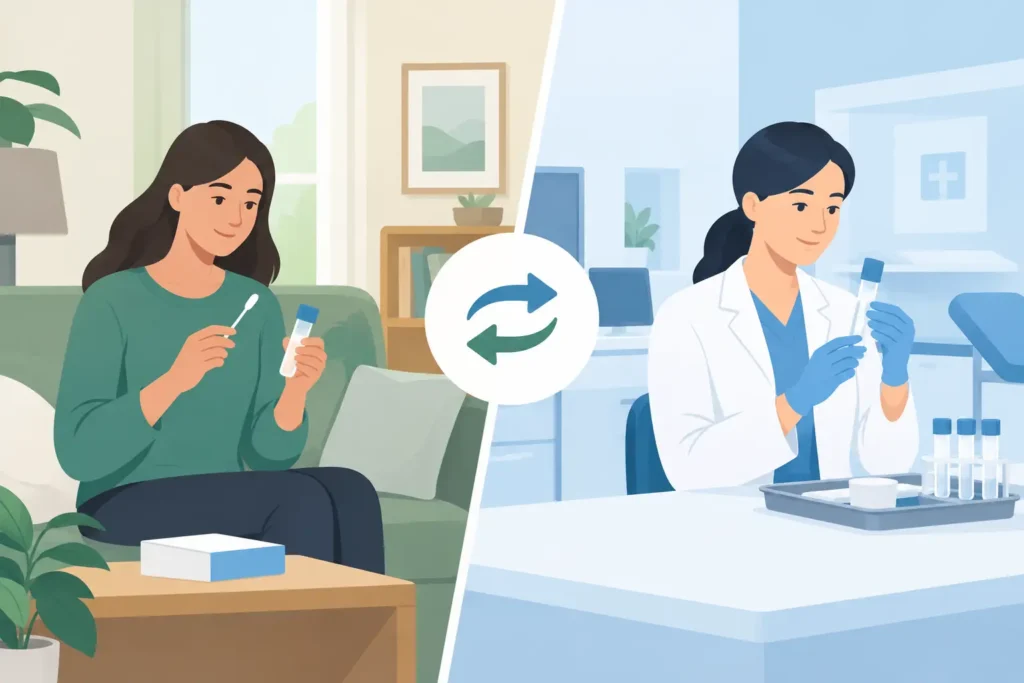
A lab order may take only a moment to send, but getting to the collection appointment can take far more out of a patient or caregiver. When considering home collection versus clinic, the best choice is not always about medical preference alone. It often comes down to mobility, timing, the type of specimen ordered, comfort level, and how much coordination a household is already managing.
A clinic or patient service center remains a practical option for many routine lab draws. Yet for an older adult who no longer drives, a patient recovering from surgery, a parent balancing a workday, or a family coordinating care from another state, traveling for a blood draw can become the hardest part of the process. Mobile collection offers another path: qualified collection professionals come to the patient, follow the laboratory order, and coordinate proper specimen handling.
Home Collection Versus Clinic: The Day-to-Day Difference
The clearest difference is where the work happens. At a clinic, the patient travels to a scheduled location, checks in, waits for an available collector, and returns home or to work afterward. This can be efficient when the location is nearby, the patient feels well, and appointment times are readily available.
With home collection, the appointment is built around the patient’s location. A certified mobile phlebotomy professional arrives at a private home, office, assisted living community, or another approved setting to collect the ordered specimen. The patient avoids transportation planning, parking, crowded waiting areas, and the physical effort of getting dressed and ready for an outing when they are not feeling their best.
Neither setting is automatically better for every order. A clinic may offer broader access to walk-in hours, on-site processing, or specialized collection capabilities. Home collection is especially valuable when the trip itself creates a barrier to care or when a quieter, more private setting will make the experience easier.
When a Clinic Visit Makes Sense
For patients who are mobile, live close to a patient service center, and have flexible schedules, a clinic appointment can be straightforward. Some people also prefer visiting a familiar location where they have completed testing before. If the laboratory needs a highly specialized collection setup, immediate processing, or a service only offered at a specific facility, the clinic may be the appropriate choice.
Clinic collection can also be useful for patients who need several services completed in one place, such as imaging, an office visit, and lab work. Combining appointments may reduce the number of trips, provided the timing and locations work well together.
Still, convenience on paper does not always translate to convenience in real life. A 15-minute collection can become a two-hour task once transportation, check-in, parking, waiting, and return travel are included. For a caregiver, that may mean arranging coverage for another family member or taking time away from work. For someone with limited mobility, it may mean relying on accessible transportation or asking a relative to accompany them.
When Home Collection Is the Better Fit
Mobile collection is often chosen because it protects a patient’s energy and routine. This matters after a procedure, during an illness, or when standing, walking, or sitting in a waiting room is difficult. It also helps patients who experience anxiety around clinical environments or who simply feel more comfortable receiving care in familiar surroundings.
For caregivers, the value is often coordination. Instead of organizing transportation and hoping an appointment runs on time, they can arrange for collection where the patient already is. This can be especially helpful in assisted living and senior living communities, where staff and family members may be coordinating several health needs at once.
Busy professionals may choose home or office collection for a different reason: control over the day. A planned mobile appointment can reduce time away from work and eliminate the uncertainty of a waiting room. Families with young children may also find it easier to have one appointment come to them rather than bring children along to a collection center.
At OnCall Mobile Labs, mobile visits are designed for patients throughout Northern Virginia, Washington, DC, Maryland, and Virginia who have a provider-issued order and need careful collection without the extra burden of travel. The goal is not to replace every clinic visit. It is to make ordered specimen collection more manageable when travel and waiting rooms do not fit the patient’s circumstances.
Comfort Is More Than a Convenience
A calmer environment can change the experience of a blood draw. Patients who are nervous about needles may feel more settled at home, with a familiar chair, a family member nearby, and fewer unfamiliar sounds or distractions. Older adults and patients with cognitive changes may also do better in a setting they recognize.
That said, home collection still requires preparation. The patient needs a safe, clean space where the collector can work comfortably. They should follow any fasting, hydration, medication, or timing instructions provided by their ordering clinician or laboratory. A home appointment is more convenient, but it does not change the clinical requirements of the test.
For families, it helps to have identification, insurance information if requested by the laboratory, the lab order, and any collection kit or paperwork ready before the appointment. Clear preparation keeps the visit focused and reduces avoidable delays.
Specimen Handling and Privacy Matter in Both Settings
Whether collection occurs at home or in a clinic, the specimen must be labeled, documented, stored, and transported according to laboratory requirements. This is not an area where convenience should mean cutting corners.
A qualified mobile collection service should work from the provider’s order, follow applicable collection protocols, use appropriate supplies, and coordinate directly with the designated laboratory when needed. Patients and families should also expect respectful handling of personal health information. HIPAA-compliant document workflows and secure records handling are part of dependable care, not an optional extra.
At a clinic, these processes often happen behind the scenes because the collection site is already integrated with the laboratory. In a mobile setting, strong coordination is what makes the experience work. Before scheduling, confirm that the service can collect the ordered test, serve the appointment location, and support the required laboratory or kit instructions.
Understanding the Cost Difference
The cost question deserves a direct answer. Clinic collection may be included in, billed through, or handled differently by the laboratory provider and insurance plan. A mobile visit usually adds a separate convenience fee because a trained professional is traveling to the patient and providing collection at the requested location.
For example, OnCall Mobile Labs charges a transparent $120 mobile visit fee, while laboratory testing is billed separately by the laboratory provider. Patients should verify laboratory billing and insurance coverage with the appropriate laboratory or insurer, particularly if they have questions about a specific test.
The comparison is not only financial. Consider the hidden costs of a clinic visit: rideshare or parking fees, missed work, time away from caregiving, and the physical strain of travel. For some households, mobile collection is a worthwhile out-of-pocket service because it prevents a missed test or a difficult day. For others, a nearby clinic remains the more economical choice.
A Simple Way to Decide
Start with the order. Does the patient have a current provider-issued lab order, and can the requested specimen be collected outside a clinic? Next, consider the patient’s condition and schedule. If getting to a collection center is simple and the needed test is readily available there, a clinic may be ideal. If travel creates stress, delays, discomfort, or a risk of missing the appointment, home collection may offer meaningful relief.
Then think about timing. Routine mobile appointments can often be planned around the patient’s day, while same-day or urgent collection availability may be limited and depends on location, staffing, and specimen requirements. When the order is urgent, scheduling early and sharing complete details helps the collection team determine what is possible.
The right setting is the one that helps the patient complete needed testing safely, accurately, and with the least unnecessary strain. When care already asks a lot of a patient and family, a well-coordinated collection appointment can make room for a quieter day.