
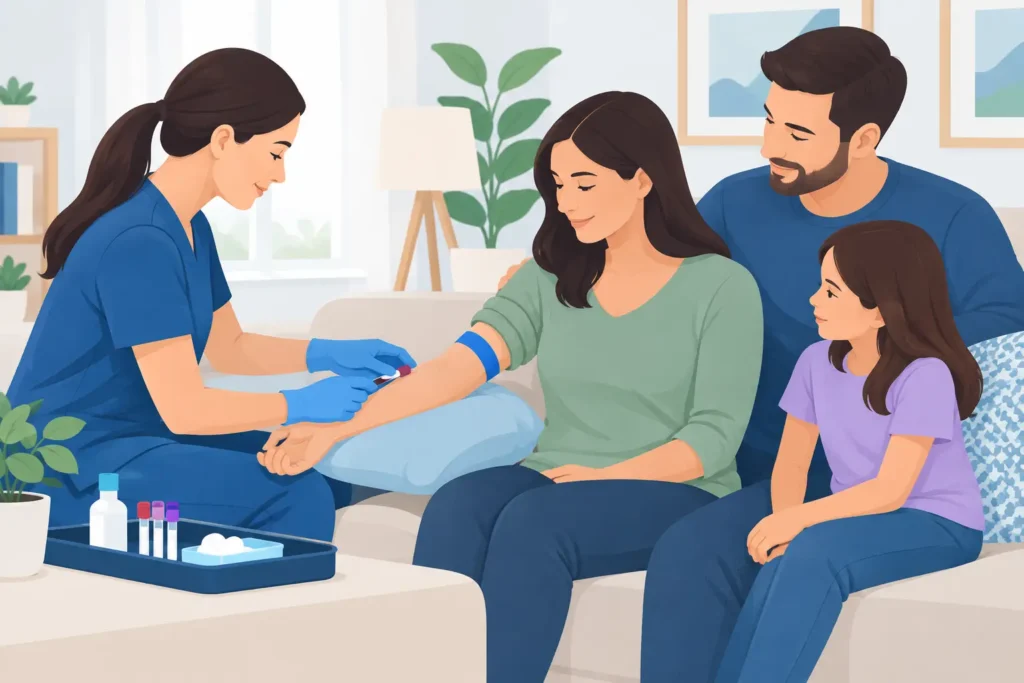
A blood draw can become an all-day task when it involves arranging transportation, helping a loved one get dressed and ready, sitting in a waiting room, and getting back home safely. The best home phlebotomy benefits are not only about convenience. They are about making ordered lab work more manageable for patients, families, and care teams when getting to a collection center is difficult or disruptive.
With mobile phlebotomy, a certified professional comes to the location that works for the patient, whether that is a private home, office, assisted living community, or another approved setting. The laboratory order still guides the collection, and testing is still performed by the laboratory. What changes is the collection experience: it can be quieter, more personal, and built around the patient’s day.
7 Best Home Phlebotomy Benefits for Patients and Caregivers
1. It removes transportation as a barrier to care
For many people, the hardest part of laboratory testing is not the blood draw. It is the trip. Older adults, patients using mobility aids, people recovering from surgery, and individuals managing chronic illness may need help getting in and out of a vehicle. A caregiver may need to take time off work simply to make the appointment possible.
At-home collection brings the appointment to the patient. This can reduce the physical strain of travel and help patients complete ordered testing that might otherwise be delayed. It is especially helpful when weather, limited transportation, fatigue, or pain make a trip to a patient service center unrealistic.
2. It gives families back valuable time
Caregivers often balance medical needs with jobs, children, household responsibilities, and their own appointments. A short blood draw can turn into several hours once travel, parking, check-in, and waiting are included.
A scheduled mobile visit creates a clearer plan. Rather than coordinating a ride and spending part of the day away from home, families can prepare for collection in a familiar setting. For busy professionals, an office visit may also be a practical option when an approved collection space is available and privacy can be maintained.
Home phlebotomy does not eliminate the need to follow pre-test instructions. Patients may still need to fast, take or pause medications as directed by their provider, or collect paperwork beforehand. But it can eliminate much of the logistical burden around the appointment.
3. Familiar surroundings can lower anxiety
Needles and blood draws are stressful for many patients, including adults who have had routine lab work for years. A crowded waiting room, unfamiliar staff, and a rushed setting can add to that tension.
At home, patients can sit in a comfortable chair, have a family member nearby, and avoid the stimulation of a busy collection center. A calm, certified phlebotomy professional can explain the process, confirm the order and identity information, and proceed carefully. That respectful pace matters, particularly for seniors, patients with cognitive changes, and anyone who feels anxious about medical appointments.
A home setting cannot guarantee a painless draw, and difficult veins can still require patience. It can, however, offer a more supportive environment for the process.
4. It supports safer routines after illness or procedures
When someone is recovering from an illness, procedure, or hospitalization, even a brief outing may take more energy than expected. The patient may be weak, unsteady, immunocompromised, or simply not ready for a waiting room full of other people.
Mobile collection helps preserve rest and routines while allowing provider-ordered specimens to be collected. This can be useful for follow-up labs that need to happen promptly after discharge or during ongoing treatment. Families can focus on recovery rather than coordinating another trip across town.
The right setting still depends on the patient’s condition and the requested test. Some specialized collections, timing requirements, or tests may need a particular laboratory location. A qualified mobile service can review the order and help determine whether an at-home collection is appropriate before the appointment is confirmed.
5. It offers more privacy and dignity
Laboratory visits can feel impersonal, especially when a patient needs assistance moving, communicating, or managing personal health information. In-home care gives patients more control over who is present and where the collection takes place.
Privacy also extends beyond the draw itself. Professional mobile phlebotomy includes careful identity verification, secure handling of documents, proper specimen labeling, and HIPAA-compliant workflows. Patients and caregivers should feel comfortable asking how paperwork is handled, how results-related documents are uploaded or transferred, and how specimens are coordinated with the laboratory.
For patients who value discretion, a planned visit at home can be far more comfortable than discussing medical details at a public check-in desk.
6. It helps assisted living teams stay focused on residents
Assisted living and senior living communities manage a constant flow of resident needs. Transporting one resident to a lab may require staff time, family coordination, medication planning, and a disruption to meals or activities. Recurring mobile collection can reduce that operational strain.
When collection is coordinated on site, residents remain in a familiar environment and staff can maintain their normal care priorities. This is not a substitute for clinical judgment or emergency care. It is a practical collection option for ordered routine, recurring, or eligible time-sensitive specimens when planned correctly.
Reliable coordination is key. Community teams need clear appointment windows, order requirements, resident preparation instructions, and confirmation of laboratory routing. A mobile provider should be organized enough to support those details without creating more work for staff.
7. It can improve follow-through on ordered testing
A provider can only act on laboratory information when the collection is completed and the specimen reaches the correct laboratory. Missed appointments happen for understandable reasons: a patient lacks a ride, a caregiver cannot leave work, or the effort of leaving home feels overwhelming.
By reducing those obstacles, mobile phlebotomy can make it easier to follow through on ordered testing. This is particularly meaningful for people who need recurring monitoring or who have postponed lab work because the process feels too difficult.
That benefit relies on careful execution. The phlebotomist must verify the order, collect and label the specimen correctly, and coordinate laboratory delivery according to the test requirements. Convenience is valuable, but specimen integrity and accurate documentation remain the priority.
When Home Collection Is the Right Choice
Home phlebotomy is often a strong fit for patients with mobility limitations, caregivers managing a demanding schedule, older adults who prefer familiar surroundings, and people who want a quieter collection experience. It can also support concierge practices, clinical research teams, and care communities that need a dependable collection workflow.
Still, it is not the best choice in every circumstance. Patients need a valid provider-issued laboratory order, and the requested test must be eligible for mobile collection. Some orders have strict handling, timing, or location requirements. Urgent needs may also depend on appointment availability, travel distance, and the laboratory’s ability to receive the specimen within the necessary window.
Before booking, have the lab order available and confirm the patient’s location, fasting status, preferred appointment time, and laboratory destination. If a patient has a history of fainting, difficult draws, special accessibility needs, or a port or line, share that information in advance. Clear details help the visit go more smoothly.
What a Well-Coordinated Visit Should Look Like
The experience should be simple: provide the order, schedule a suitable time, and prepare the patient according to the provider’s instructions. During the visit, the phlebotomist should confirm identity and collection details, perform the draw with professional care, label specimens at the point of collection, and follow the required laboratory handoff process.
Transparent pricing also matters. At OnCall Mobile Labs, the mobile visit fee is separate from laboratory testing charges, which are billed by the laboratory provider. Knowing that distinction ahead of time helps families plan without surprises.
The best home phlebotomy service is not merely a person who arrives with supplies. It is a care partner that respects the patient’s time, protects sensitive information, communicates clearly, and handles every collection detail with care. When lab work fits the patient’s life instead of overwhelming it, it becomes easier to take the next appropriate step in their care.