
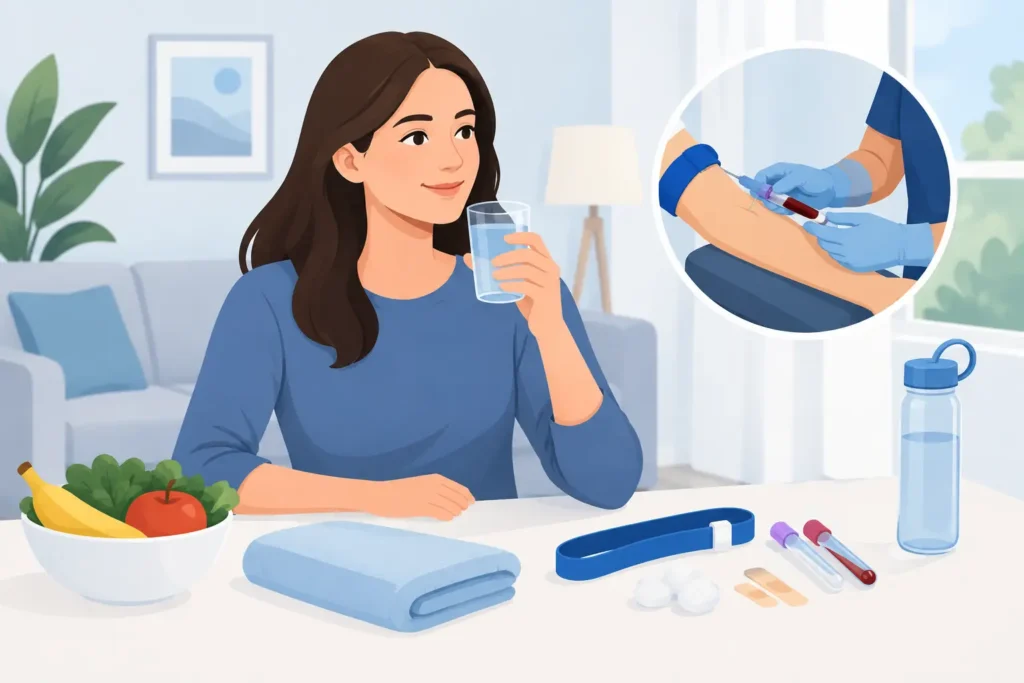
A blood draw is often a small part of a much bigger health picture: monitoring a medication, checking recovery after a procedure, managing a chronic condition, or gathering answers for your provider. Knowing how to prepare for phlebotomy can make the appointment feel more comfortable, protect the accuracy of your results, and prevent an avoidable repeat visit.
For an at-home collection, a little preparation also helps the visit run on time. Your phlebotomy professional can focus on careful collection while you remain in a familiar, private setting – without the travel, crowded waiting rooms, or added stress of a patient service center.
How to Prepare for Phlebotomy Before Your Appointment
Start with the instructions attached to your specific lab order. Preparation is not the same for every test. Some collections require fasting, while others are more accurate when you are well hydrated or collected at a particular time of day. Your ordering provider or laboratory instructions should always guide your preparation.
Confirm whether fasting is required
Fasting commonly means no food or caloric drinks for a set number of hours before collection. Water is usually permitted and is often encouraged, but do not assume that every test follows the same rules. Coffee, tea, juice, soda, alcohol, gum, mints, and nutritional supplements may affect certain results, even when they seem harmless.
If you were told to fast, follow the length of time listed in your instructions. Do not fast longer than necessary in an effort to be extra careful. Extended fasting can leave some people dizzy, weak, or more likely to faint during a blood draw. If fasting instructions are unclear, contact the ordering provider or laboratory before your appointment rather than guessing.
For patients with diabetes, those who are pregnant, and anyone with a condition that makes fasting difficult, preparation should be individualized. Ask the provider who ordered the test how to handle food, insulin, and other medications safely.
Drink water unless you were told otherwise
Good hydration can make veins easier to locate and may support a smoother collection. In the hours before your appointment, drink water as you normally would unless your provider has given you fluid restrictions. This is especially helpful for older adults, people taking diuretics, and patients who find that their veins are often difficult to access.
Hydration does not mean forcing large amounts of water right before the appointment. That can be uncomfortable, particularly if mobility is limited. A normal, steady intake is generally more useful than trying to catch up at the last minute.
Take medications only as directed
Continue prescribed medications unless the clinician who ordered your testing has told you otherwise. Do not stop a medication, vitamin, or supplement on your own because you are having blood drawn. Some tests do require special timing around medication doses or supplements, including certain hormone, therapeutic drug monitoring, and vitamin tests. The ordering provider is the right source for those instructions.
Have a list of medications and supplements available if your provider has asked for one. It can also be helpful to tell the phlebotomy professional about blood thinners, a history of easy bruising, or previous problems with blood draws. These details support safe, thoughtful care, but they do not replace instructions from your medical team.
Gather What the Phlebotomist Will Need
A mobile blood draw is simpler when the required paperwork is ready before the appointment begins. Keep your provider-issued lab order or requisition, photo identification, insurance information if requested by the laboratory, and any specimen kit supplied by the laboratory in one easy-to-find place.
Your lab order matters because it identifies the tests requested, the ordering provider, and often the laboratory that will process the specimen. If the order was sent electronically, confirm that the collection service has the needed details before the visit. If you have a paper order, place it somewhere visible so it is not forgotten when the appointment begins.
Some testing has additional requirements. A urine, stool, saliva, swab, DNA, or drug-screening collection may require a specific kit, chain-of-custody paperwork, timed collection details, or instructions about when and how to collect the sample. Review those materials in advance. If a kit is incomplete, expired, or unclear, address it before collection day whenever possible.
Prepare a Comfortable Collection Space
Choose a clean, well-lit area with a stable chair or supportive place to sit. A kitchen or dining table, a quiet office, or a comfortable chair near good lighting often works well. The goal is a space where you can rest your arm comfortably and remain still for a few minutes.
Wear a short-sleeved shirt or a top with sleeves that can be rolled above the elbow without becoming tight. Tight sleeves can restrict circulation or make it harder to access the arm. If you tend to feel cold, keep a blanket nearby, but make sure the collection arm remains easy to reach.
For patients who are unsteady, prone to fainting, or recovering from illness, it may be safer to have the collection performed while seated with support or in another appropriate position discussed at the visit. A caregiver can help by clearing the area, keeping needed documents nearby, and staying close if the patient wants reassurance.
Privacy matters, too. If possible, silence work notifications, step away from household activity, and let others know you need a few uninterrupted minutes. At-home phlebotomy should feel calm and respectful, not rushed.
Tell Your Phlebotomy Professional What Helps You
Many people are anxious about needles, even if they have had blood work many times before. Share that concern early. A certified phlebotomy professional can explain what will happen, help you choose a comfortable position, and use a steady, unhurried approach.
If you have fainted during a prior blood draw, felt nauseated, had difficult veins, developed a large bruise, or have a preferred arm, say so before collection begins. The same applies if you have had lymph node removal, a mastectomy, dialysis access, an injury, or another reason a particular arm should be avoided. Your phlebotomist may need to assess the situation and follow applicable safety requirements.
Try not to watch the needle if that increases your anxiety. Slow breathing, looking at a fixed point across the room, or speaking with a caregiver can help. There is no need to apologize for being nervous. Clear communication is part of good care.
Plan for the Minutes After the Draw
After collection, keep firm pressure on the bandage site for the amount of time your phlebotomist recommends. People taking blood thinners or those who bruise easily may need to hold pressure longer. Avoid heavy lifting or strenuous use of that arm immediately afterward if possible.
A small bruise or brief tenderness can happen, particularly when veins are fragile or difficult to access. However, contact a medical professional promptly if you experience persistent bleeding, increasing swelling, severe pain, numbness, or other concerning symptoms.
If you fasted, have a snack and return to your usual meals as directed once the collection is complete. Sit for a few moments before standing if you feel lightheaded. For an older adult or a patient recovering from illness, having water and a light snack ready can make the transition after the draw more comfortable.
A Few Details That Prevent Day-of Delays
Confirm the appointment window, collection address, parking or building-access instructions, and the best phone number to reach you. In senior living communities or secured buildings, a family member or staff contact may need to coordinate entry. If a patient cannot come to the door independently, make that plan ahead of time.
OnCall Mobile Labs coordinates collection details carefully, including secure document handling and laboratory requirements, so patients and caregivers can spend less time managing logistics. Same-day availability may be limited, which makes advance scheduling especially helpful when a test has a deadline or must be collected at a particular time.
The most useful preparation is not perfection. Follow the instructions for your specific order, set up a comfortable space, and speak openly about any health concerns or past blood-draw experiences. That gives your care team the information they need to make a routine collection feel more manageable – and lets you keep your attention where it belongs: on your health and the next step in your care.