
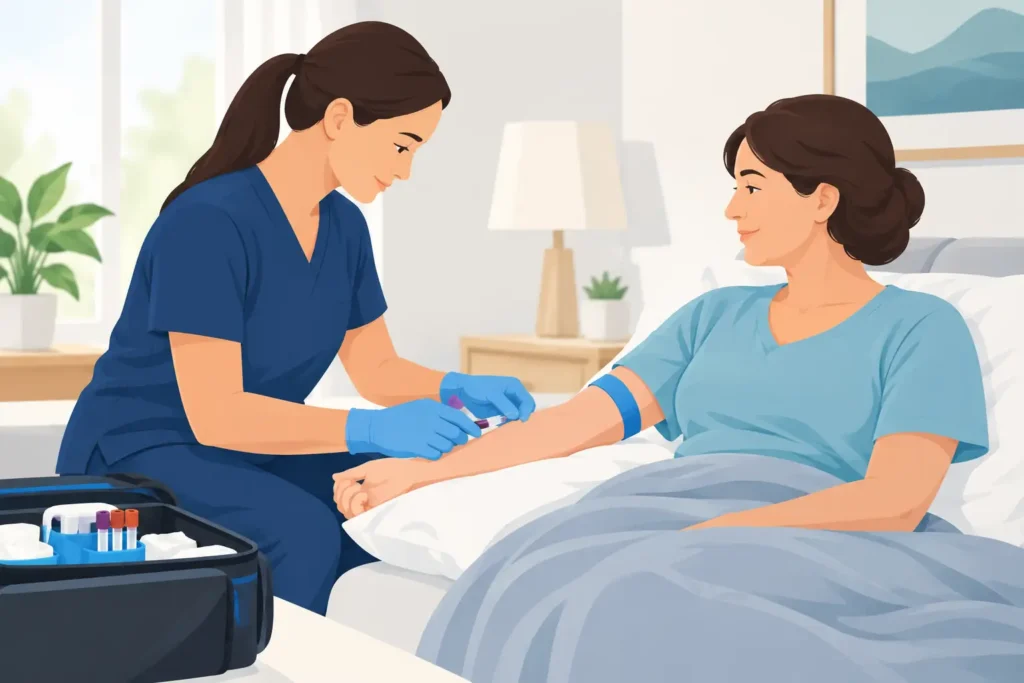
The trip to a lab can feel far bigger than it looks on a calendar when you are recovering from surgery. Getting dressed, arranging a ride, managing pain, navigating stairs, and sitting in a waiting room may be difficult or simply more than your care team wants you to take on. Mobile phlebotomy after surgery brings the ordered blood draw to your home, so follow-up testing can happen with less disruption to your recovery.
For patients and family caregivers across Northern Virginia, Washington, DC, Maryland, and Virginia, at-home collection can remove a practical barrier at a time when energy and mobility are limited. It is not a replacement for surgical follow-up or urgent medical care. It is a way to complete the laboratory work your provider has ordered in a calmer, more comfortable setting.
Why blood work may be needed after surgery
Post-operative lab work is not unusual, but the reason for it depends on the procedure, your health history, medications, and symptoms. A surgeon, primary care provider, or specialist may order tests to check blood counts, monitor electrolytes, assess kidney or liver function, review glucose levels, or follow another condition that can affect healing.
Some patients need one follow-up draw. Others may need repeat collection during the first days or weeks after a procedure. For an older adult, a person healing from orthopedic surgery, or someone managing several chronic conditions, the logistics of repeated lab visits can become a real source of stress.
The timing matters. If your provider has given you a specific collection window, share that information when scheduling. If you have questions about whether fasting is required, whether to take a medication before the draw, or which tests are being monitored, contact the ordering provider or their office. The mobile collection professional follows the order and collection requirements, while your provider interprets the results and guides your medical care.
When mobile phlebotomy after surgery makes sense
At-home blood collection is often a practical option when leaving home would create unnecessary strain. That might mean you are using a walker after joint replacement, recovering from abdominal surgery, limiting activity after a procedure, or relying on a family member for transportation.
It can also help caregivers. A spouse or adult child may be coordinating medications, meals, mobility support, and several medical appointments. Avoiding one more car ride and one more waiting room can make the day more manageable without delaying ordered testing.
Privacy and comfort are meaningful considerations, too. Some people feel faint during blood draws, have difficult veins, or simply prefer not to navigate a crowded patient service center while they are tired and sore. A certified mobile phlebotomy professional can collect the ordered specimen in the familiar surroundings of home, with time to help the patient settle in comfortably.
There are limits. A mobile blood draw is generally best for a stable patient with an existing provider order and a collection that can be performed safely outside a hospital or clinic. New or worsening chest pain, trouble breathing, uncontrolled bleeding, confusion, fainting, a high fever, severe swelling, or other concerning post-operative symptoms need prompt clinical guidance. Call your surgical team, seek urgent care, or call 911 when appropriate rather than waiting for a collection appointment.
A simple process for post-operative collection
The process should feel organized from the start. Before booking, have the provider-issued lab order available. The order tells the collection professional which tests are needed and where the specimens should be sent. Laboratory testing is billed separately by the laboratory provider.
1. Share the order and scheduling details
Provide the lab order, the patient’s contact information, preferred appointment time, and the collection location. Let the scheduling team know about practical considerations, such as a recent surgery, limited mobility, a gate code, stairs, a caregiver who will be present, or a preferred arm for collection when relevant.
If the order requires fasting, a timed draw, special handling, or a particular laboratory destination, those details should be reviewed before the appointment is confirmed. Clear coordination upfront helps avoid an unsuccessful visit or a specimen that cannot be processed as intended.
2. Prepare a comfortable collection space
Choose a clean, well-lit area with a stable chair and enough room for the patient and phlebotomist to work safely. A kitchen table, dining chair, or supportive armchair often works well. Patients should not have to stand if they are unsteady, sore, or prone to dizziness.
Keep the lab order, photo identification, insurance information if requested by the laboratory, and a current medication list nearby. Unless the provider has instructed fasting, drinking water beforehand can make collection easier for some patients. Follow the provider’s instructions exactly, particularly when a test has special preparation requirements.
3. Receive careful collection and coordinated handling
At the appointment, the phlebotomy professional verifies the patient and order, prepares the supplies, performs the draw, labels the specimens, and manages required documentation. The goal is a quiet, respectful experience that does not add stress to an already demanding recovery day.
After collection, specimens are handled according to the applicable laboratory requirements and coordinated for delivery. Patients should ask their ordering provider how and when results will be communicated. In most cases, the provider is the right source for result interpretation, treatment decisions, and questions about whether the recovery plan needs to change.
What patients and caregivers should ask before scheduling
A few details can make post-surgical collection smoother. Confirm that the provider has issued a complete order and that the laboratory can perform the requested testing. Ask whether the draw must occur at a certain time, whether fasting is required, and whether any medication instructions apply.
It is also useful to discuss access needs honestly. Let the scheduling team know if the patient is bedbound, uses a wheelchair, has a history of difficult draws, is taking a blood thinner, or has restrictions related to the surgical site. These details do not necessarily prevent in-home collection, but they allow the visit to be planned thoughtfully.
For family members arranging care from another city, confirm who will be present at the appointment and who is authorized to provide information. A reliable workflow protects privacy while keeping the right people informed. HIPAA-compliant document handling and clear communication are especially important when several relatives and providers are involved.
The value of a calmer recovery day
The value of mobile collection is not just convenience. After surgery, conserving energy can matter. The effort required to get to a lab may mean increased pain, fatigue, fall risk, or a missed test because the trip feels unmanageable. Bringing the collection to the patient can help keep follow-up care moving while respecting the pace of recovery.
At the same time, expectations should be clear. Mobile phlebotomy does not speed up every laboratory result, and same-day availability may be limited. Collection fees and laboratory testing charges are separate, so patients should understand the service arrangement before booking. At OnCall Mobile Labs, the mobile visit fee is transparent, and the laboratory bills testing separately.
A dependable service also relies on preparation from everyone involved: a valid order, accurate patient information, an accessible collection space, and a provider available to review results. Those details may sound administrative, but they are what turn an at-home draw into reliable care coordination.
Recovery asks a great deal of patients and families. When ordered lab work is part of the plan, arranging collection at home can preserve comfort, reduce unnecessary travel, and leave more room for the work that matters most: resting, healing, and staying connected with the care team.