
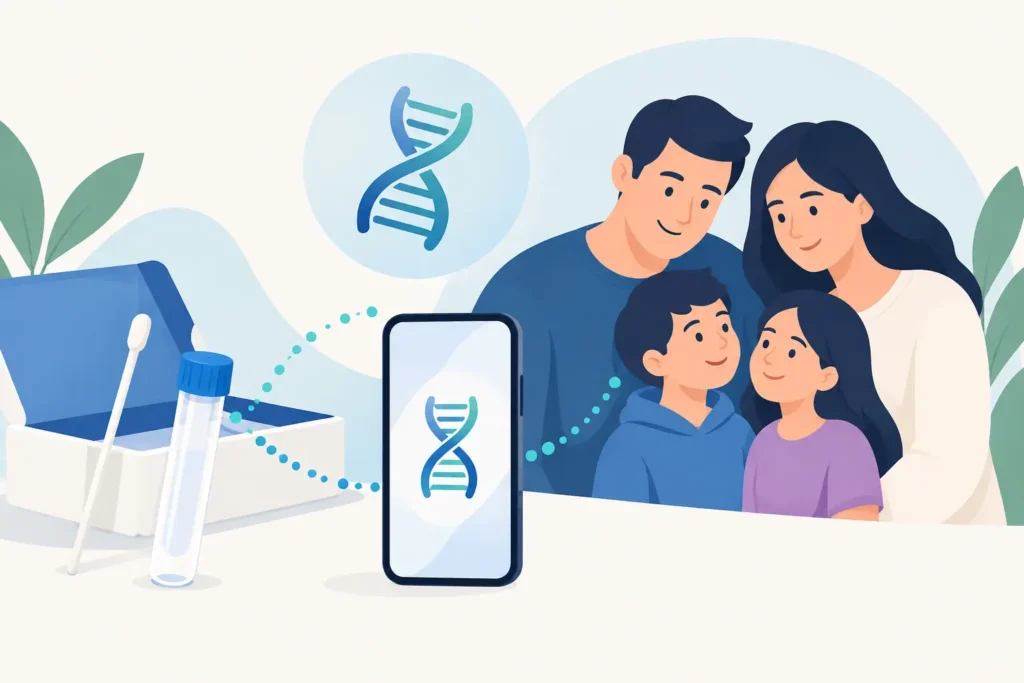
A DNA test can carry real weight for a family. It may be needed to answer a personal question, support an immigration or legal process, meet a clinical requirement, or complete a laboratory-directed test. Mobile DNA collection gives patients and families a more private way to complete the specimen-collection step without arranging transportation, sitting in a waiting room, or trying to coordinate several schedules at once.
For many tests, the collection itself is straightforward. What matters most is following the laboratory’s instructions exactly, protecting the integrity of the specimen, and using the right process for the purpose of the test. A carefully coordinated appointment at home, an office, an assisted living community, or another approved location can make that process feel much more manageable.
What mobile DNA collection involves
Mobile DNA collection means a trained collection professional travels to the patient or participant rather than asking them to visit a collection center. The professional follows the instructions supplied by the laboratory, testing program, provider, attorney, agency, or other authorized party. Depending on the test, this may involve a cheek swab, paperwork review, photo identification, specimen packaging, and documented transfer to the appropriate laboratory or shipping process.
The collection appointment is only one part of the testing process. The laboratory determines which test is performed, what specimen it needs, whether an order or authorization is required, and how results are reported. A mobile collector does not interpret results or decide which DNA test is appropriate. Their role is to make the ordered collection process calm, accurate, and properly documented.
This distinction is especially helpful for caregivers. Instead of trying to decipher kit instructions while supporting a parent, child, or recovering family member, they can arrange for a professional who understands collection procedures and can keep the appointment organized.
Legal and non-legal DNA tests require different handling
Not every DNA test needs the same collection workflow. Before scheduling, confirm with the laboratory or requesting organization whether the test is informational or requires a legally documented chain of custody.
Informational or personal-use testing
Some DNA tests are intended for personal knowledge only. The laboratory may provide a kit and permit self-collection, but families may still prefer professional assistance when a participant has limited mobility, anxiety, memory concerns, or difficulty following multistep directions. The lab’s instructions remain the source of truth for how the sample must be collected, labeled, packaged, and returned.
Legal, court-admissible, or agency-required testing
Tests used for legal, immigration, custody, inheritance, or other official purposes often require stricter identity verification and chain-of-custody procedures. The laboratory or requesting agency may specify who may collect the sample, which identification documents are needed, whether photographs or fingerprints are required, and how the sealed specimen must be transferred.
For these appointments, a missed signature, incorrect label, or unapproved collection method can create delays or make the specimen unacceptable. That is why it is wise to have the laboratory’s complete instructions available before the appointment is booked. A professional mobile collection service can coordinate the logistics, but it must work within the protocol established by the authorized laboratory or agency.
Why families choose an at-home appointment
The practical benefit is simple: care happens where the patient is most comfortable. For an older adult who no longer drives, that may mean avoiding a difficult trip across town. For a family caring for someone after surgery, it may prevent an unnecessary outing. For a busy professional, a private office appointment can reduce time away from work.
Privacy matters, too. DNA testing can be sensitive, even when the collection is quick. An at-home appointment offers a quieter setting where participants can ask practical questions, review required documents, and complete the collection without a crowded reception area around them.
Mobile service can also reduce the coordination burden on family caregivers. Rather than arranging transportation, finding parking, managing mobility equipment, and waiting at a patient service center, caregivers can focus on supporting the person being tested. This is particularly valuable in assisted living and senior living communities, where a scheduled on-site visit may be easier for residents, families, and staff.
What to have ready before the collector arrives
A smooth appointment begins with the correct information. If the test was ordered by a physician, attorney, court, employer, research team, or laboratory, keep the order, authorization, case number, kit, or instructions ready. The exact requirements depend on the testing program, so do not assume that one DNA collection follows the same process as another.
Participants should also have current government-issued identification available when required. For a minor, the laboratory may require documentation from a parent or legal guardian. If the collection is legal or court-directed, verify ahead of time whether witnesses, consent forms, photographs, or additional identification are needed.
It also helps to select a clean, well-lit area with a table or counter for paperwork and specimen materials. The participant should avoid eating, drinking, smoking, chewing gum, or using oral products before a cheek-swab collection if the laboratory’s directions call for it. The required waiting period varies, so follow the instructions that came with the specific kit or order.
What happens during the appointment
A professional collection visit is designed to be orderly and respectful. The collector will review the available paperwork and laboratory instructions, confirm the participant’s identity when required, and explain the collection steps in clear language. If a cheek swab is needed, the collection itself is usually brief and noninvasive.
The collector then labels, seals, and documents the specimen according to the applicable protocol. For chain-of-custody testing, each handoff and signature may matter. For other laboratory-directed testing, the focus may be on correct kit completion and secure packaging. The specimen is prepared for the laboratory’s designated return method, which may include direct laboratory coordination or shipping instructions.
Patients and families should feel comfortable asking logistical questions during the visit. For example, they may want to confirm that the forms are complete, understand where the specimen is going, or ask who will communicate results. Results are generally issued by the laboratory or authorized requesting party, not by the mobile collector.
Choosing a mobile collection provider
The right provider should offer more than transportation to the patient. Look for certified professionals, clear scheduling communication, respectful bedside manner, secure document handling, and experience following laboratory-specific directions. If the test has legal or agency requirements, ask whether the provider can support that protocol before finalizing an appointment.
It is also worth confirming the service fee and what it covers. Mobile collection fees are separate from laboratory testing fees in many cases. At OnCall Mobile Labs, the transparent $120 mobile visit fee covers the convenience of sending a certified professional to the scheduled location, while laboratory testing is billed separately by the laboratory provider.
Availability can depend on the location, collection requirements, and the urgency of the request. Same-day appointments may be limited, particularly when a laboratory protocol requires advance review or specialized supplies. Scheduling early gives the collection team time to confirm the details that protect the specimen and avoid a repeat visit.
A more considerate way to complete a required step
DNA collection does not have to add another stressful trip to an already demanding situation. With the right laboratory instructions, the required documents, and a trained professional who comes to the patient, families can complete the collection in a setting that supports comfort and privacy.
When the next step feels complicated, start by gathering the laboratory paperwork and confirming the test requirements. A well-prepared mobile appointment can keep the process focused on the person receiving care, not the travel required to get there.