
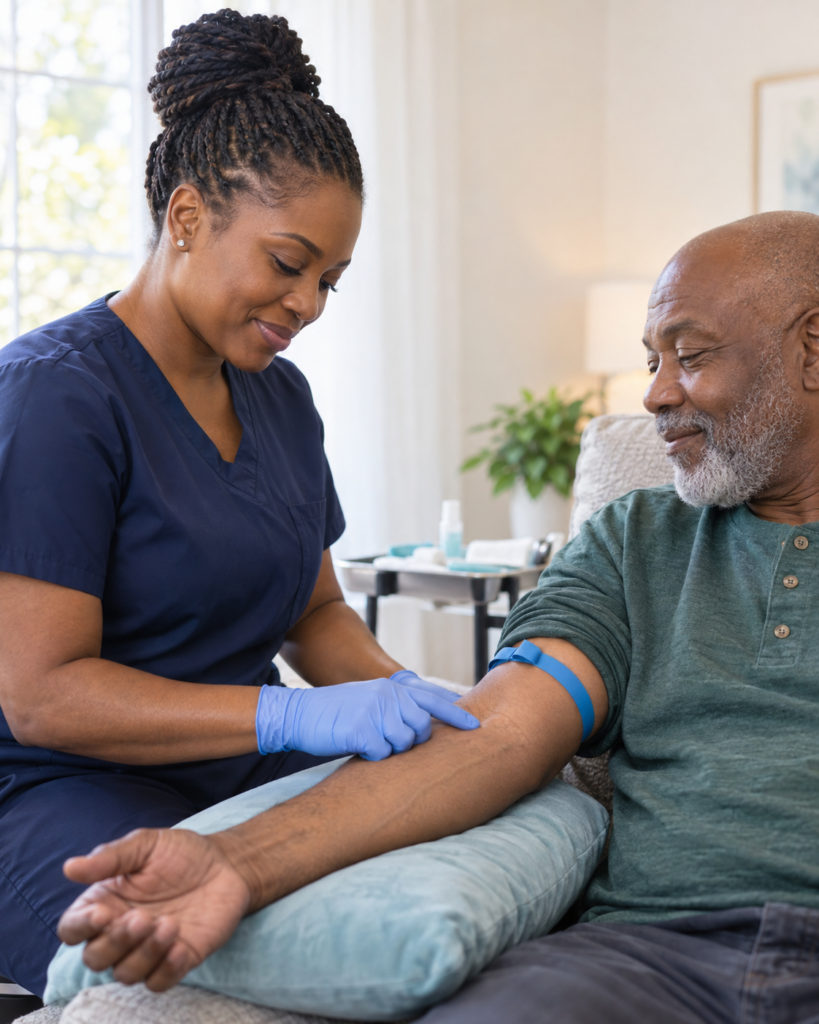
How Preparation and Experience Improve Collection Success
ONCALL MOBILE LABS
Professional Insights in Mobile Specimen Collection
PUBLICATION NO. 4 | SEPTEMBER 20, 2026
How Preparation and Experience Improve Collection Success
A successful blood draw begins before the needle is inserted. Patient preparation, careful vein assessment, appropriate equipment, and an experienced collector can make a significant difference—especially for patients with difficult-to-access veins.
Not Every Blood Draw Is Routine
For many patients, collecting a blood specimen is quick and uncomplicated. For others, it can be considerably more challenging.
Veins may be small, deep, fragile, scarred, mobile, or difficult to locate. Dehydration, prolonged fasting, age, medical conditions, medications, anxiety, previous chemotherapy, repeated venipuncture, and long-term intravenous therapy may also affect collection.
A difficult blood draw does not necessarily mean the patient has no usable veins or that the collector has done something incorrectly. It means the collection may require additional preparation, careful assessment, specialized equipment, and a more experienced approach.
At OnCall Mobile Labs, difficult blood draws are approached with patience, clinical judgment, and respect for the patient. Our founder, Daniel Kanu, is a Medical Laboratory Scientist with more than 20 years of phlebotomy and laboratory experience.
This combination of hands-on collection experience and laboratory knowledge allows us to consider not only how to obtain the blood but also how to protect the patient and preserve the quality of every specimen collected.
OnCall Mobile Labs maintains an approximately 95% collection success rate, based on internal collection records. Although no responsible professional can guarantee success in every situation, proper preparation and experience can significantly improve the likelihood of completing a collection safely and successfully.
What Makes a Blood Draw Difficult?
Several factors may affect how easily a vein can be located and accessed.
Small, Deep, or Rolling Veins
Some patients naturally have small veins. Others have veins located deeper beneath the skin or surrounding tissue, making them difficult to see and feel.
Rolling veins move when pressure is applied. These veins require proper anchoring, controlled needle placement, and a steady collection technique.
Fragile Veins
Older adults, chronically ill patients, and individuals taking certain medications may have veins that are thin or fragile. These veins may collapse more easily or allow blood to leak into the surrounding tissue, resulting in bruising or a hematoma.
Dehydration
When a patient is dehydrated, veins may become less prominent. This can make it more difficult to locate a suitable vein and collect the required volume of blood.
Prolonged Fasting
Fasting may be necessary for certain tests, but fasting longer than instructed can leave a patient dehydrated, weak, dizzy, or more susceptible to fainting.
Patients should follow the exact instructions provided by their ordering clinician or laboratory. They should not fast unless instructed to do so.
Scar Tissue and Repeated Venipuncture
Patients who undergo frequent laboratory testing, chemotherapy, dialysis, intravenous therapy, or repeated hospitalization may develop scar tissue around commonly used collection sites. This can limit the number of suitable veins available.
Medical Conditions and Previous Treatments
Edema, obesity, vascular disease, burns, paralysis, previous breast or lymph-node surgery, dialysis access, and long-term medical treatment may limit which sites can be safely used.
Fear and Anxiety
Needle anxiety can cause muscle tension, movement, rapid breathing, dizziness, sweating, nausea, and vasovagal reactions. A calm environment and clear communication can make the experience more manageable.
Preparation Begins Before the Appointment
Although preparation cannot guarantee a one-attempt collection, it can create better conditions for a successful draw.
Drink Water When Permitted
Unless a healthcare provider has placed the patient on fluid restrictions, drinking water before the appointment may help make veins easier to locate.
Patients who are fasting should confirm whether plain water is allowed. Individuals with heart, kidney, or fluid-balance conditions should follow their clinician’s specific instructions.
Follow Fasting Instructions Carefully
Patients should confirm:
- Whether fasting is required
- How many hours they should fast
- Whether plain water is permitted
- Whether medications should be taken
- Whether coffee, tea, gum, or supplements are allowed
Patients should never stop prescribed medication solely because they are having blood collected unless their prescribing clinician specifically instructs them to do so.
Stay Warm
Warmth may help increase blood flow near the skin. Wearing warm clothing or applying a properly controlled warm compress before collection may make veins easier to locate.
Excessively hot materials should never be applied directly to the skin.
Wear Accessible Clothing
Short sleeves or loose sleeves that can be raised comfortably above the elbow allow the collector to examine both arms and identify the most appropriate site.
Avoid Strenuous Exercise Immediately Before Collection
Heavy exercise may contribute to dehydration and can affect certain laboratory results. Patients should follow any activity restrictions provided with their test instructions.
Share Previous Collection Experiences
Patients should tell the collector if they:
- Have historically difficult veins
- Have fainted during previous blood draws
- Take blood-thinning medication
- Bruise or bleed easily
- Have allergies to adhesives, antiseptics, or latex
- Have undergone breast surgery or lymph-node removal
- Have a dialysis fistula or graft
- Have an IV, port, PICC line, injury, swelling, or infection
- Have experienced sharp or electrical pain during a previous draw
- Know which arm or collection site has worked successfully in the past
This information allows the collector to prepare appropriately before beginning the procedure.
Why Experience Matters
Difficult collections require more than the ability to insert a needle. The collector must assess the patient, evaluate available veins, understand the tests ordered, choose suitable equipment, recognize complications, and know when an attempt should be discontinued.
With more than 20 years of phlebotomy and laboratory experience, Daniel Kanu brings a comprehensive understanding of both specimen collection and laboratory processing.
That experience is especially valuable when working with:
- Older adults
- Homebound patients
- Patients with chronic medical conditions
- Individuals receiving chemotherapy or frequent treatment
- Patients with small, deep, rolling, or scarred veins
- Patients who have experienced repeated unsuccessful attempts
- Individuals with needle anxiety or a history of fainting
- Patients requiring specialty or research-kit collections
An experienced collector does not simply look for a visible vein. The vein is evaluated by touch to determine its size, depth, direction, stability, and resilience. The most visible vein is not always the safest or most appropriate vein.
Selecting the Appropriate Equipment
The equipment used should be based on the patient’s veins and the requirements of the ordered tests.
Depending on the circumstances, the collector may use:
- A standard evacuated-tube collection system
- A winged blood-collection set
- An appropriately sized needle
- Smaller-volume tubes when laboratory requirements permit
- An alternative approved collection site
- A vein finder when necessary to help identify veins that are difficult to see or locate
A vein finder can provide additional visual guidance when assessing small, deep, or poorly visible veins. However, it does not replace an experienced collector’s ability to palpate and evaluate a vein’s size, depth, direction, stability, and suitability for collection.
The final site selection must still be based on professional assessment.
A butterfly needle is not automatically the best choice for every patient. Equipment must allow the required blood volume to be collected safely while maintaining specimen quality.
Similarly, using the smallest available needle does not always produce a better specimen. Inappropriate equipment or excessive force can contribute to slow collection, clotting, hemolysis, insufficient volume, or specimen rejection.
A Successful Draw Is More Than Filling a Tube
Obtaining blood is only one part of a successful collection.
The specimen must also be:
- Collected from the correct patient
- Matched to the correct laboratory order
- Placed in the appropriate collection tubes
- Collected in the correct order of draw
- Filled to the required volume
- Mixed according to tube requirements
- Labeled accurately at the time of collection
- Processed within the required timeframe
- Maintained at the correct temperature
- Protected from light when required
- Packaged and transported properly
Poor collection or handling can result in hemolysis, clotting, contamination, insufficient quantity, inaccurate results, or specimen rejection.
Daniel’s laboratory background provides OnCall Mobile Labs with an important advantage: we understand what happens to the specimen after it leaves the patient’s arm. This helps us make collection decisions that protect both the patient and the integrity of the laboratory results.
Understanding Vasovagal Reactions
A vasovagal reaction is one of the most common concerns associated with blood collection.
It occurs when the nervous system overreacts to a trigger such as fear, pain, emotional stress, seeing blood, or having blood drawn. This reaction can cause the patient’s heart rate and blood pressure to decrease suddenly, temporarily reducing blood flow to the brain.
The patient may become lightheaded or briefly lose consciousness.
Although many vasovagal reactions resolve quickly, they must always be taken seriously. One of the greatest immediate dangers is an injury caused by falling.
Warning Signs
A patient experiencing a vasovagal reaction may report or display:
- Lightheadedness
- Dizziness
- Sudden weakness
- Nausea
- Sweating
- Pale, cool, or clammy skin
- Feeling unusually warm
- Blurred or tunnel vision
- Ringing in the ears
- Frequent yawning
- A slow or weak pulse
- Brief loss of consciousness
Patients should immediately tell the collector if they begin to experience any of these symptoms. They should not attempt to tolerate the symptoms silently so the collection can continue.
How We Help Prevent Vasovagal Reactions
Before beginning the collection, we ask patients to disclose any history of:
- Fainting during blood draws
- Severe needle anxiety
- Dizziness during medical procedures
- Seizures
- Low blood pressure
- Previous vasovagal reactions
When appropriate, the patient may be positioned in a reclined or lying-down position before the draw begins.
We also work to reduce unnecessary anxiety by maintaining a calm environment, explaining the procedure clearly, keeping needles and blood tubes outside the patient’s direct view, and encouraging slow, steady breathing.
Patients who have experienced previous reactions should not be collected while standing or seated without adequate support.
How We Respond if a Vasovagal Reaction Occurs
If a patient begins to experience symptoms, the collection is stopped immediately. Patient safety takes priority over completing the blood draw.
Our response may include:
- Safely removing the needle and applying pressure to the collection site.
- Reclining or positioning the patient to help restore blood flow to the brain.
- Elevating the patient’s legs when appropriate and consistent with the patient’s condition.
- Protecting the patient from falling or striking nearby objects.
- Loosening restrictive clothing when necessary.
- Maintaining a calm and comfortable environment.
- Monitoring the patient’s responsiveness, breathing, appearance, and recovery.
- Preventing the patient from standing or walking until fully alert and stable.
- Activating emergency medical services when symptoms are prolonged, unusual, or medically concerning.
The patient should rise slowly after recovery and only when it is safe to do so.
When Fainting Requires Emergency Assistance
Fainting should never automatically be assumed to be a harmless vasovagal reaction.
Emergency medical assistance may be required when the patient:
- Is not breathing normally
- Does not regain consciousness promptly
- Experiences chest pain
- Has difficulty breathing
- Develops an irregular or concerning pulse
- Has persistent confusion or unusual behavior
- Experiences a seizure or prolonged convulsive activity
- Develops weakness, facial drooping, or difficulty speaking
- Sustains an injury during the episode
- Is pregnant or has a serious underlying medical condition
- Experiences repeated or unexplained fainting
Recurrent or unusual fainting episodes should be evaluated by a qualified healthcare professional.
Frequently Asked Questions
Can drinking water guarantee a successful collection?
No. Proper hydration may make veins easier to locate, but it cannot eliminate every anatomical or medical challenge. Patients with fluid restrictions should follow their healthcare provider’s instructions.
Should I eat before my blood draw?
That depends on the tests ordered. Patients should not fast unless instructed by their ordering provider or laboratory.
Should I stop taking my medication?
No. Patients should never stop prescribed medication unless directed by the prescribing healthcare professional.
Can my blood be drawn while I am lying down?
Yes. This may be the safest option for patients with a history of fainting, severe anxiety, weakness, or balance concerns.
Can the collector use the vein that usually works?
Information about previously successful sites is helpful. However, the collector must examine the area and determine whether it remains safe and appropriate.
Can blood be collected from the hand?
Hand veins may be used when appropriate, but they can be smaller and more sensitive than veins in the arm.
Why not always use a butterfly needle?
A winged collection set can be helpful for certain small, superficial, or fragile veins, but it is not necessary or ideal for every collection. The choice depends on the vein, the required blood volume, and the tests ordered.
When is a vein finder used?
A vein finder may be used when veins are difficult to see or initially locate. It can assist with visualization, but it does not determine whether a vein is suitable for collection. Palpation, professional judgment, and the collector’s experience remain essential.
Can blood be drawn from an arm with an IV, fistula, or graft?
A dialysis fistula or graft should not be used for routine venipuncture. Arms containing IVs or vascular-access devices require careful assessment and may be subject to clinical restrictions.
What if I have had breast surgery or lymph nodes removed?
The collector must be informed before the procedure. Site selection will depend on the type of surgery, the patient’s present condition, provider instructions, and applicable collection policies.
Why did the blood stop flowing?
The needle may have shifted, the vein may have collapsed, blood flow may have slowed, or the vein wall may be resting against the needle opening. The collector should reassess the situation rather than repeatedly probe the area.
Why did I develop a bruise?
Bruising can occur when blood leaks from the vein into the surrounding tissue. Fragile veins, blood-thinning medications, insufficient pressure, and strenuous arm use after collection may increase the risk.
How can I reduce bruising?
Firm, direct pressure should be maintained for the recommended amount of time. Patients who take blood thinners or bleed easily may need to hold pressure longer.
What if I feel sharp, burning, or electrical pain?
The collector should be told immediately. The procedure should be stopped and the site evaluated. Persistent pain, numbness, weakness, swelling, or changes in the arm’s color or temperature should be reported to a healthcare professional.
How many attempts should be made?
Repeated attempts should be limited. Patient safety, clinical urgency, organizational policy, available personnel, and the patient’s condition should guide the decision.
What happens if the collection cannot be completed?
The patient will be informed and the safest next step will be discussed. This may include resting and hydrating when permitted, rescheduling, involving another qualified professional, or referring the patient to an appropriate clinical or laboratory facility.
Can OnCall Mobile Labs guarantee a first-attempt collection?
No responsible collector can guarantee first-attempt success. Human anatomy and medical conditions vary considerably.
Our commitment is to use more than 20 years of experience, careful assessment, appropriate equipment, and sound clinical judgment to maximize the likelihood of success while minimizing unnecessary attempts.
Experience That Inspires Confidence
Patients with difficult veins often remember the frustration, discomfort, and anxiety of repeated unsuccessful blood draws. These experiences can make future appointments stressful before the collection even begins.
OnCall Mobile Labs offers a calmer and more personalized alternative.
Our approximately 95% collection success rate reflects the value of preparation, experience, careful vein assessment, appropriate equipment selection, controlled technique, and laboratory knowledge.
We do not rush difficult collections or place completing a draw above patient safety. Our objective is to:
- Improve the likelihood of a successful collection
- Minimize unnecessary attempts and discomfort
- Recognize and respond appropriately to vasovagal reactions
- Protect the patient throughout the procedure
- Preserve specimen quality
- Deliver properly collected and handled specimens to the laboratory
The OnCall Mobile Labs Standard
More than 20 years of phlebotomy and laboratory experience
Approximately 95% collection success rate
Medical Laboratory Scientist-led service
Patient-centered care for routine and difficult collections
Vein-finder assistance when appropriate
Professional specimen processing, handling, and shipping
Mobile service throughout Northern Virginia, Washington, DC, and Maryland
ONCALL MOBILE LABS
We Come to You
Mobile Blood and Specimen Collection
Northern Virginia | Washington, DC | Maryland
Phone: 703-452-2425
Email: info@oncallmobilelabs.com
Website: www.oncallmobilelabs.com
This publication provides general educational information. It is not intended to replace individualized medical advice, diagnosis, emergency care, or instructions from a patient’s healthcare provider.